
FEILD:
UX
CLIENT:
The local community
DATE:
06/02/2025
USERS:
ADHD users
about.
I designed a prototype specifically for individuals with ADHD, focused on making the process of choosing and booking a restaurant simpler and less overwhelming.
Through conversations with people who have ADHD, I learned that they often face challenges with focus, memory, and task completion. During these discussions, I noticed moments where they would pause mid-conversation or lose their train of thought, which highlighted how easily small steps or details can be forgotten—especially during multi-step tasks like restaurant reservations.
This insight helped shape the design direction: the interface needed to be clear, structured, and supportive, reducing cognitive load and guiding users gently through the process without distractions or unnecessary decisions.


challenge.
When I was trying to review the app again, I was missing the reinforcement to strengthen users’ confidence to do the process and the motivation to encourage them to do it again. So I added a plate collection, where after they finish the process, they get a plate, and they can collect the plates and redeem them for a discount after collecting a certain number of plates, like a loyalty scheme and collect as a reward. I also redesigned the home page to be more visually appealing and personalised to users’ location, allowing them to easily see popular restaurants nearby. This helps users quickly find relevant options without feeling overwhelmed.
In the future, the ‘spin the plate’ feature could be improved by allowing users to specify their cuisine preferences before spinning. For example, if someone dislikes spicy or raw food, they can select their options ahead of time. This would personalise and improve the experience, eliminating the need for consumers to keep spinning until they find something they like to eat.


result.
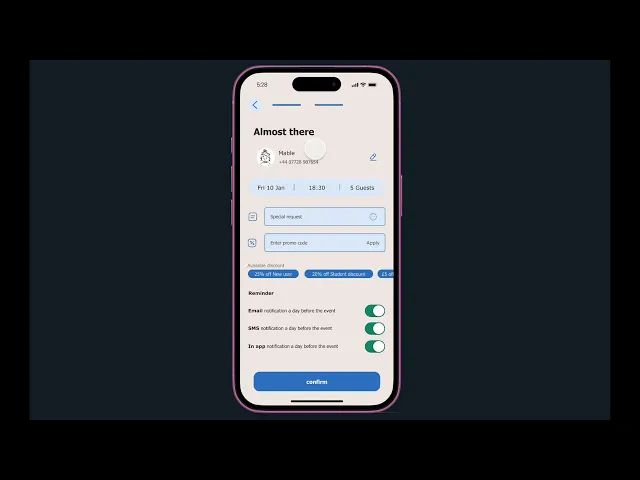
The prototype successfully introduced a calmer and more supportive restaurant booking experience tailored for users with ADHD. By integrating smart filters, users were able to narrow their choices based on dietary requirements, budget, and preferred atmosphere, reducing the stress of decision-making. To prevent overwhelm, a fun and engaging decision feature was included, helping users choose without becoming stuck or anxious over options. Budget considerations were supported through visible discounts, offering reassurance and financial ease. To address forgetfulness and potential booking errors, a co-edit function and calendar integration allowed users to make adjustments and retain clear reminders of their plans. Finally, a rewards and reflection page provided positive reinforcement, helping users recognise progress and feel encouraged through small achievements. Together, these features created an experience that is structured, empowering, and designed to meet the real cognitive needs of users with ADHD.

